



Crohn’s disease is a lifelong condition that causes inflammation in your digestive tract. It can lead to symptoms like ongoing diarrhea, belly pain and weight loss. These symptoms often come and go in cycles, called flares and remission. There’s no cure, but treatment can reduce inflammation, manage symptoms and help improve your quality of life.
Advertisement
Cleveland Clinic is a non-profit academic medical center. Advertising on our site helps support our mission. We do not endorse non-Cleveland Clinic products or services. Policy
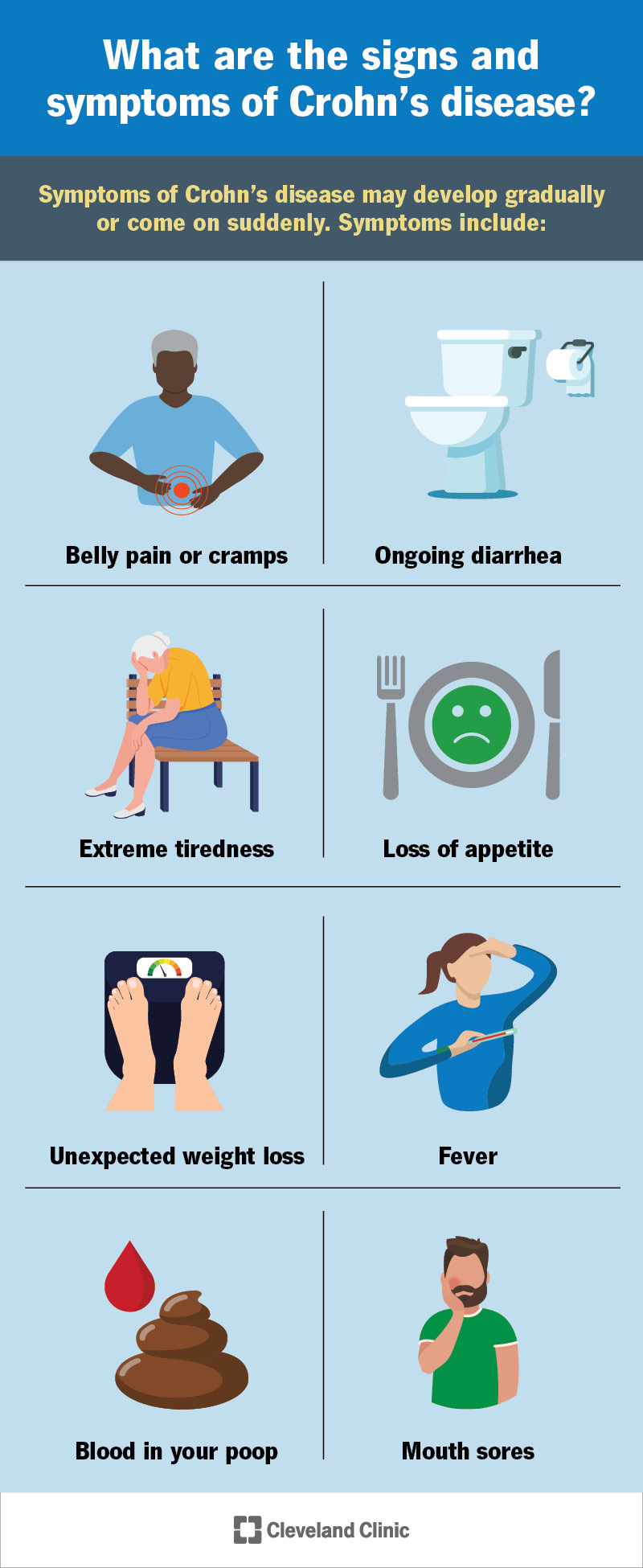
Image content: This image is available to view online.
View image online (https://my.clevelandclinic.org/-/scassets/images/org/health/articles/9357-crohns-disease.jpg)
Crohn’s disease is a long-term condition that causes swelling and irritation in your digestive tract. It’s one of the main types of inflammatory bowel disease (IBD).
Advertisement
Cleveland Clinic is a non-profit academic medical center. Advertising on our site helps support our mission. We do not endorse non-Cleveland Clinic products or services. Policy
Crohn’s happens when your immune system overreacts and attacks your digestive tract, causing inflammation. Symptoms can range from mild to severe.
For some people, Crohn’s disease can be debilitating. Ongoing inflammation may lead to frequent bathroom trips, pain, fatigue and time away from work or school.
Crohn’s is a lifelong condition. But treatment can help you manage symptoms, reduce inflammation and live an active life.
Crohn’s can affect any part of your digestive tract, from your mouth to your anus. Some people have Crohn’s in more than one area of their digestive tract. Healthcare providers often describe the disease based on where swelling and irritation occur.
Types include:
These types describe where Crohn’s affects your body. But your symptoms and treatment may be similar.
Advertisement
Video content: This video is available to watch online.
View video online (https://cdnapisec.kaltura.com/p/2207941/sp/220794100/playManifest/entryId/1_ky5dq913/flavorId/1_5f3sgelj/format/url/protocol/https/a.mp4)
Learn the common symptoms of Crohn’s disease.
Symptoms of Crohn’s disease may develop slowly over time or come on suddenly. They may be mild to severe.
Some people have long-term (chronic) symptoms until treatment helps manage them. Other people have symptoms that come and go. You may have periods when the disease is active (flares) and times when you feel better (remission).
In more severe cases, symptoms can interfere with your daily life. They can make it difficult to work, go to school or keep up with normal routines.
Signs of Crohn’s disease include:
Crohn’s can also affect other parts of your body. You may notice signs and symptoms like:
In children and teens, Crohn’s may delay growth or puberty.
Researchers don’t know the exact cause of Crohn’s disease. But they believe it may be due to a combination of your immune system and your genes.
In Crohn’s disease, your immune system overreacts. Normally, your immune system protects you from harmful germs. But with Crohn’s, it attacks harmless bacteria in your gut. This causes swelling and irritation.
Genetics may also play a role. Crohn’s sometimes runs in biological families. Certain genes may increase your risk. But many people with Crohn’s have no family history of the condition.
Anyone can develop Crohn’s disease. But some factors raise your risk, including:
Crohn’s can sometimes lead to serious complications that may need extra treatment or surgery. Without treatment, these complications can affect your quality of life.
One example is a fistula. Fistulas are abnormal tunnels that form between parts of your body that don’t usually connect. In Crohn’s, they often develop around your anus and may cause pain, swelling, or leakage of pus or poop.
Other complications may include:
Advertisement
Not everyone with Crohn’s disease develops these complications.
There isn’t one test to diagnose Crohn’s disease. A healthcare provider will use a combination of tests to look for inflammation and rule out other conditions.
Your provider will start by asking about your symptoms, medical history and biological family history. They’ll also do a physical exam. They may refer you to a gastroenterologist (a doctor who specializes in digestive diseases).
Tests used to make a Crohn’s disease diagnosis may include:
Your provider will review the results to confirm Crohn’s disease or rule out other conditions.
There’s no cure for Crohn’s. But treatment can reduce inflammation, relieve symptoms and help you stay in remission. Without treatment, the condition can worsen over time and lead to more serious symptoms or complications.
Advertisement
Your healthcare provider will make a plan based on:
Your provider may recommend medications, nutrition therapy and/or surgery.
Most people take medicine to reduce inflammation or calm their immune system. These medications reduce your risk of flares and complications.
Types of medications to treat Crohn’s disease include:
Your provider will monitor your response and change your medications as needed.
Crohn’s can make it harder for your body to absorb nutrients. To help prevent malnutrition, your provider may recommend:
Advertisement
Medications work for many people. But you may need surgery if complications develop or symptoms don’t improve with treatment. Surgery for Crohn’s disease can treat problems like:
Surgery can improve symptoms and treat complications, but it doesn’t cure Crohn’s disease. You may still need medication after.
Contact a healthcare provider if you notice symptoms of Crohn’s. They’ll run tests to find out what’s going on.
If you’ve been diagnosed with Crohn’s, reach out to your provider if you:
Seek immediate care if you have severe belly pain, signs of a blockage (like vomiting or not passing gas or poop) or heavy bleeding.
There’s currently no cure for Crohn’s disease, and outlooks vary. Some people have mild symptoms. But for others, the disease is severe. They may require ongoing treatment or surgery.
Crohn’s disease isn’t usually life-threatening. Life expectancy is generally normal. But ongoing inflammation can increase your risk of colon cancer and cause other complications.
Regular check-ups and screening tests, like colonoscopies, can monitor your health and catch problems early. Treatment can help manage irritation and reduce symptoms. Most people with Crohn’s disease can live full, active lives.
You can’t prevent Crohn’s disease. But you may be able to reduce flare-ups and manage symptoms. These self-care tips may help:
Work with your provider or a dietitian to create a plan that fits your needs.
Crohn’s disease is a lifelong condition, but it doesn’t have to define your life. Symptoms can sometimes be challenging, but you can successfully manage them with the right treatment plan and support. Working closely with your healthcare provider, you can find a plan that keeps inflammation under control. That, along with regular check-ups and healthy habits, can help you reduce flares and spend long periods in remission.



Sign up for our Health Essentials emails for expert guidance on nutrition, fitness, sleep, skin care and more.
Learn more about the Health Library and our editorial process.
Cleveland Clinic’s health articles are based on evidence-backed information and review by medical professionals to ensure accuracy, reliability and up-to-date clinical standards.
Cleveland Clinic’s health articles are based on evidence-backed information and review by medical professionals to ensure accuracy, reliability and up-to-date clinical standards.
Crohn’s disease can get in the way of living an active life. Cleveland Clinic gastroenterologists and colorectal surgeons can help you manage Crohn’s and get relief.
